
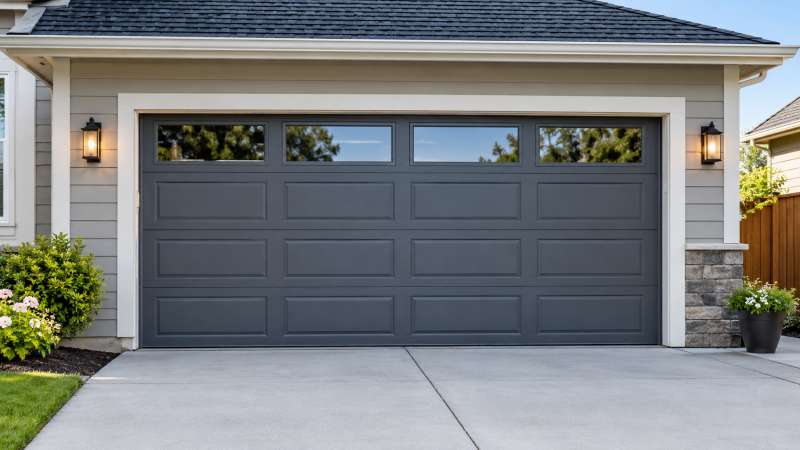
A garage door plays an important role in protecting your home, securing your vehicles, and improving your property’s appearance. It provides convenient access to your garage while helping protect tools, equipment, bicycles, and other valuable belongings. Moreover, the right design can enhance your home’s exterior and increase its overall functionality.
However, choosing the right door requires more than selecting an attractive design. Homeowners should consider durability, insulation, security, operating mechanisms, maintenance requirements, and installation costs. Understanding these factors makes it easier to select a suitable option for your property.
Whether you are building a new home, renovating an existing garage, or replacing an old door, this complete guide explains the main types, standard sizes, essential components, installation considerations, maintenance practices, and common repair problems.
What Is a Garage Door?
A garage door is a large movable barrier that opens manually or through a motorized opener to allow vehicles and people to enter or leave a garage. Manufacturers produce these doors in different materials, sizes, designs, and operating styles to accommodate various residential and commercial requirements.
Modern doors offer several advantages. They improve security, simplify daily access, reduce exposure to harsh weather, and help create a more attractive exterior. Additionally, insulated models can help regulate temperatures in garages connected to living spaces.
Traditional doors often rely on manual operation, while modern systems use electric motors, remote controls, wireless keypads, and smartphone applications. Therefore, homeowners can choose a system that balances convenience, performance, and budget.
Common Types of Garage Doors
Different door styles offer unique benefits. Before making a purchase, consider the available space, architectural design, budget, and frequency of use.
1. Sectional Garage Doors
Sectional doors consist of several horizontal panels connected by hinges. When the door opens, rollers guide the panels along vertical tracks before moving them horizontally beneath the garage ceiling.
These doors remain popular in residential properties because they combine practical operation with a wide selection of designs and materials.
Key advantages include:
- Efficient use of driveway space.
- Compatibility with automatic openers.
- Availability of insulated panels.
- A wide variety of colors and finishes.
- Suitable designs for many residential properties.
However, sectional doors require sufficient overhead clearance and properly maintained tracks. They may not suit every garage layout, especially when ceiling space is limited.
2. Roll-Up Garage Doors
Roll-up doors use narrow horizontal slats that coil around a drum positioned above the opening. Their compact operating mechanism makes them useful for garages and commercial facilities with limited overhead space.
Many commercial buildings use this design because it offers practical operation and can withstand frequent use when properly specified.
The main benefits include compact storage, durability, and efficient space utilization. Nevertheless, the mechanism may require specialized installation, and some residential buyers may find the appearance less decorative than other styles.
3. Carriage House and Hinged Doors
Carriage house doors provide a traditional appearance inspired by older carriage buildings. Some models use outward-swinging hinged panels, while others use sectional mechanisms that reproduce the same classic look.
These doors complement traditional houses, cottages, and properties with distinctive architectural features.
Homeowners can choose decorative handles, window inserts, wood finishes, and custom colors to match their exterior design. However, genuine outward-swinging doors require enough clearance in front of the garage. Snow, uneven ground, or a short driveway can also interfere with their operation.
4. Slide-to-the-Side Doors
Slide-to-the-side doors move horizontally along tracks rather than lifting toward the ceiling. Depending on the design, the panels may bend around a corner or travel along an interior wall.
This arrangement can help homeowners who need to preserve overhead space for storage or equipment.
Before choosing this style, check whether the garage has enough unobstructed wall space. You should also confirm that the tracks and supporting surfaces can accommodate the door’s weight.
5. Tilt-Up Garage Doors
Tilt-up doors generally consist of one large panel that tilts outward and upward when opened. They usually have fewer individual panels than sectional systems.
Their relatively straightforward construction can appeal to homeowners seeking a traditional operating mechanism. However, the outward movement requires clearance near the driveway, and the panel’s weight makes a properly designed spring system essential.
Standard Garage Door Sizes
Choosing the correct dimensions ensures smooth operation, safe vehicle access, and an appropriate fit. Although manufacturers offer standard sizes, actual requirements depend on the property, vehicle dimensions, and available structural opening.
Common residential dimensions include:
| Door type | Typical width | Typical height |
|---|---|---|
| Single-car door | 8 feet | 7 feet |
| Double-car door | 16 feet | 7 feet |
These measurements are common examples rather than universal standards. Other widths and heights are available, including taller doors for larger vehicles.
How to Measure Your Garage Opening
Follow these steps before purchasing a replacement door:
- Measure the width: Measure the clear opening from one side to the other at several points.
- Measure the height: Check the opening from the finished floor to the top of the frame.
- Check the side room: Measure the available wall space on both sides for tracks and related hardware.
- Measure the headroom: Determine the distance between the top of the opening and the ceiling.
- Check the backroom: Measure the available depth inside the garage to accommodate the door when it opens.
Record the measurements carefully. If the opening is uneven or the structure has unusual features, ask a qualified installer to assess the site before ordering.
Essential Components of a Garage Door
Understanding the main components helps homeowners recognize maintenance needs and identify problems before they become more serious.
1. Spring System
Springs counterbalance the door’s weight, allowing it to open and close without excessive effort. Most residential systems use torsion springs or extension springs.
Torsion springs typically sit above the door opening, while extension springs generally run alongside the horizontal tracks.
These components operate under substantial tension. A damaged spring can make the door extremely heavy or cause it to fall unexpectedly. Therefore, never attempt to remove, adjust, or replace a spring without appropriate training and equipment.
2. Tracks and Rollers
Metal tracks guide the door as it moves. Rollers travel through these tracks to help the panels operate smoothly.
Misaligned tracks, worn rollers, loose fasteners, and accumulated dirt can cause grinding noises or uneven movement. Regular visual inspections can help identify these problems early.
However, homeowners should not loosen track hardware or reposition a heavily loaded door themselves. A qualified technician can correct alignment problems safely.
3. Garage Door Opener
An automatic opener uses an electric motor to move the door through a connected drive mechanism. Common options include chain-drive, belt-drive, screw-drive, and wall-mounted systems.
- Chain-drive openers: Use a metal chain and often provide an economical solution.
- Belt-drive openers: Use a belt and generally operate more quietly.
- Screw-drive openers: Use a rotating threaded mechanism to move the door.
- Wall-mounted openers: Install beside the door’s torsion shaft and can preserve ceiling space.
The best option depends on the door’s weight, noise requirements, installation layout, and budget.
4. Hinges and Brackets
Hinges connect individual panels in sectional systems, while brackets support rollers and other hardware. Damaged hinges or loose brackets can affect movement and create safety risks.
Inspect visible components for unusual wear, cracks, or missing fasteners. Arrange professional repairs if you notice structural damage.
5. Safety Sensors
Modern automatic openers commonly use photoelectric sensors near the bottom of the opening. These sensors detect an obstruction and help prevent the closing door from striking a person, pet, or object.
Keep the sensor lenses clean and make sure nothing blocks their path. Test the system according to the manufacturer’s instructions, and arrange service if the door fails to reverse as expected.
How to Choose the Best Garage Door for Your Home
Selecting the right door involves balancing appearance, durability, insulation, security, and cost.
Consider the Material
The material affects the door’s weight, appearance, maintenance requirements, and resistance to weather.
Steel: Steel doors offer durability and many finish options. Insulated steel models can also improve thermal performance. However, damaged coatings may allow corrosion, particularly in exposed or humid environments.
Wood: Wooden doors create a natural, traditional appearance. They can be customized with different finishes, but they usually require more maintenance to protect against moisture, sunlight, and deterioration.
Aluminum: Aluminum doors are relatively lightweight and can resist rust. Some designs suit contemporary homes, although certain panels may dent more easily than steel.
Fiberglass and composite materials: These products can reproduce the appearance of wood while offering different maintenance characteristics. Their performance depends on construction quality and the specific product.
Compare product warranties, weather resistance, maintenance instructions, and local availability before choosing a material.
Evaluate Insulation
Insulation matters most when the garage connects directly to your home, contains temperature-sensitive belongings, or serves as a workshop.
Insulated doors commonly use polyurethane or polystyrene cores. Manufacturers may provide an R-value, which indicates resistance to heat flow. Generally, a higher R-value means greater insulating performance under comparable conditions.
However, the door alone does not determine the garage’s energy performance. Air leakage around the frame, gaps beneath the door, wall insulation, and ventilation also matter.
Match the Exterior Design
A well-chosen door can improve curb appeal and complement your home’s architectural style.
For example, contemporary houses may suit clean lines and understated colors, while traditional properties may look better with decorative panels or wood-inspired finishes.
Consider matching the door’s color with the exterior trim, windows, front entrance, or other architectural details. Window inserts can add natural light, but their placement should balance appearance with privacy.
Review Security Features
A garage often provides access to vehicles, tools, and sometimes the interior of the home. Therefore, security deserves careful attention.
Look for sturdy construction, dependable locking arrangements, secure remote controls, and an automatic opener with appropriate rolling-code technology. Keep remotes out of sight in parked vehicles and secure the door connecting the garage to the house.
Smart features may provide activity notifications or remote monitoring. Nevertheless, follow the manufacturer’s security recommendations and protect connected accounts with strong passwords and multifactor authentication when available.
Garage Door Installation: A Step-by-Step Overview
Correct installation helps ensure reliable operation and reduces unnecessary wear. Although the exact procedure varies by model, a professional installation usually follows these stages.
Step 1: Inspect the Opening
The installer checks the frame, floor, side clearances, headroom, and available backroom. They also identify structural damage, uneven surfaces, or obstacles that could affect the installation.
Step 2: Select a Compatible Door
Choose a door that matches the measured opening, intended use, required insulation, and opener specifications. Confirm that the frame can support the necessary tracks and hardware.
Step 3: Prepare the Site
The installer removes the old system when necessary and prepares the mounting surfaces. They also check whether electrical work or structural repairs are required.
Step 4: Install Tracks and Panels
The installer positions the tracks, mounts the panels or curtain according to the manufacturer’s instructions, and secures the relevant hardware. Proper alignment helps prevent binding and uneven movement.
Step 5: Install the Spring and Opener Systems
The spring system balances the door’s weight, while the opener provides powered movement when included. Because springs store significant energy, trained professionals should handle their installation and adjustment.
Step 6: Test the System
The installer checks travel limits, balance, movement, remote controls, and safety features. They should also verify that the door closes evenly and that the obstruction-reversal system operates according to the manufacturer’s instructions.
Finally, ask for operating instructions, maintenance recommendations, and warranty documentation.
Common Garage Door Problems and Their Solutions
Even a well-maintained system may develop problems over time. Recognizing the warning signs helps homeowners decide when to request professional service.
The Door Will Not Open
Possible causes include a depleted remote battery, a power interruption, a locked door, a faulty opener, or a broken spring.
First, check the power supply and remote battery if it is safe to do so. If the opener runs but the door remains closed, or the door suddenly feels unusually heavy, stop using the system and contact a technician.
The Door Makes Unusual Noises
Grinding, squeaking, rattling, or banging sounds can indicate worn rollers, loose hardware, poor alignment, or spring problems.
You can remove dirt from accessible areas and follow the manufacturer’s lubrication instructions for approved components. However, do not lubricate parts that the manufacturer specifies should remain dry.
Arrange professional inspection if the noise persists or comes from the spring assembly.
The Door Reverses Before Closing
Misaligned or obstructed safety sensors can prevent the door from closing properly. Dirt on sensor lenses, damaged wiring, or incorrect travel settings may also cause problems.
Clear visible obstructions and gently clean the lenses. If the system still reverses unexpectedly, request professional service rather than bypassing the safety features.
The Door Moves Unevenly
Uneven movement may indicate a damaged roller, track misalignment, cable trouble, or an unbalanced spring system.
Stop operating the door if it appears crooked, hangs unevenly, or moves suddenly. A technician can inspect the lifting mechanism and restore safe operation.
The Door Closes with Gaps
Gaps along the sides or bottom may allow water, dust, insects, and outside air to enter the garage.
Inspect the weatherstripping for cracks or compression. Replacing worn seals may help, provided the door and frame remain correctly aligned. Persistent gaps may require adjustments or repairs to the opening itself.
Garage Door Maintenance Tips
Regular maintenance helps extend service life and identify developing issues. Follow the manufacturer’s maintenance schedule and use only procedures suitable for your particular model.
Inspect the Door Monthly
Look for damaged panels, frayed cables, loose weather seals, unusual gaps, and visible signs of corrosion. Pay attention to changes in operating speed or sound.
Do not touch cables or springs that appear damaged or under tension.
Keep Accessible Areas Clean
Remove dirt and debris from the floor near the opening and clean accessible door surfaces using suitable products. Keep tracks free from obstructions, but avoid applying grease or other products unless the manufacturer recommends them.
Check Safety Features
Test the automatic reversal and photoelectric sensors according to the opener’s manual. Never place yourself or another person beneath a moving door during testing.
If the safety system fails, stop using automatic operation until a qualified technician repairs it.
Maintain Weather Seals
Inspect the bottom seal and perimeter weatherstripping for cracks, gaps, or wear. Replace damaged seals with compatible products to help reduce drafts and keep out rain and debris.
Schedule Professional Inspections
A trained technician can inspect springs, cables, rollers, tracks, mounting hardware, and the opener. Professional servicing is particularly important when you notice unusual movement, excessive noise, or visible damage.
How Much Does a Garage Door Cost?
The total cost depends on several factors, including size, material, insulation, design, opener type, installation complexity, and local labor rates.
Basic models generally cost less than custom-designed or highly insulated options. Additional expenses may include removing an existing door, repairing the frame, installing electrical connections, upgrading the opener, or replacing damaged components.
To compare quotes effectively, request an itemized estimate covering:
- The door and included hardware.
- Insulation and decorative upgrades.
- The opener and remote controls.
- Removal and disposal of the existing door.
- Labor and any structural adjustments.
- Warranty coverage and future servicing.
Compare the full installed cost rather than focusing only on the advertised product price. A durable, properly installed system may provide better long-term value than a cheaper option that requires frequent repairs.
When Should You Replace Your Garage Door?
Repairing a minor problem may be practical, but replacement becomes worth considering when the door has extensive damage or repeated mechanical failures.
Consider replacement if the panels have serious corrosion, the system lacks essential modern safety features, replacement parts are difficult to obtain, or repair costs approach the price of a suitable new installation.
You may also choose a replacement to improve insulation, update your home’s appearance, reduce operating noise, or accommodate a larger vehicle.
Before making a decision, ask a qualified technician to assess the door’s structural condition and compare repair costs with replacement options.
Garage Door Safety: Important Precautions
Garage doors are heavy mechanical systems, and their springs and cables can store dangerous amounts of energy. Safe operation requires attention to both mechanical condition and user behavior.
Follow these precautions:
- Keep children away from moving panels, tracks, springs, and opener mechanisms.
- Never stand or walk beneath a moving door.
- Do not remove or adjust springs and lifting cables yourself.
- Never bypass photoelectric sensors or automatic reversal features.
- Keep remotes secure and explain safe operation to household members.
- Disconnect power only according to the manufacturer’s instructions before permitted maintenance.
- Contact a trained technician when the door becomes unstable, crooked, or unusually heavy.
If a door falls suddenly, has a broken spring, or shows signs of cable failure, keep people away from the area and arrange professional repairs.
Conclusion
Choosing the right garage door can improve your home’s security, convenience, energy performance, and exterior appearance. By understanding door styles, standard dimensions, materials, mechanical components, installation requirements, and maintenance practices, you can make a more informed decision.
Start by measuring the opening accurately and identifying your priorities. Next, compare suitable materials, insulation levels, security features, and operating mechanisms. Finally, choose a reputable installer and maintain the system according to the manufacturer’s recommendations.
With careful planning and regular professional inspections, your garage door can provide dependable service and help protect your property for years to come.
For more info visit Theserpentrogue

